The Cambridge Primary Review Trust

Search

  • Home
    • CPRT national conference
    • Blog
    • News
  • About CPRT
    • Overview
    • Mission
    • Aims
    • Priorities
    • Programmes
    • Priorities in Action
    • Organisation
    • People
      • National
    • Professional development
    • Media
  • CPR
    • Overview
    • Remit
    • Themes
    • Themes, Perspectives and Questions in Full
    • Evidence
    • People
    • CPR Publications
    • CPR Media Coverage
    • Dissemination
  • Networks
    • Overview
    • Schools Alliance
  • Research
    • Overview
    • CPRT/UoY Dialogic Teaching Project
    • Assessment
    • Children’s Voice
    • Learning
    • Equity and Disadvantage
    • Teaching
    • Sustainability and Global Understanding
    • Vulnerable children
    • Digital Futures
    • Demographic Change, Migration and Cultural Diversity
    • Systemic Reform in Primary Education
    • Alternative models of accountability and quality assurance
    • Initial Teacher Education
    • SW Research Schools Network
    • CPR Archive Project
  • CPD
  • Publications
  • Contact
    • Contact
    • Enquiries
    • Regional
    • School
    • Media
    • Other Organisations

September 1, 2014 by Robin Alexander

Campaign for sustainability

Sustainability and Environmental Education (SEEd) is currently campaigning to have the 2002 Education Act amended to make education for sustainability an obligation on all schools, notwithstanding the fact that it has been excluded from the new National Curriculum. The Secretary of State has said that while she accepts the importance of sustainability it’s up to schools to decide what to do about it, if anything. This seems a somewhat feeble response from a government that in 2010 proudly billed itself ‘the greenest government ever’ .

In this matter DfE appears to be out of step not just with its own rhetoric and groups like SEEd and the Cambridge Primary Review Trust – which lists sustainability and global citizenship among its eight educational priorities – but also the UN and OECD. UNESCO’s agenda for global education after 2015 will link education to sustainability, global citizenship and equity, while OECD is likely to include ‘global competence’ in the next international PISA tests. Since so much educational policy these days, including the new national curriculum, is PISA-driven, we wonder why this should be an exception.

This autumn, as noted in an earlier blog, CPRT will be joining forces with other organisations to raise the educational profile of sustainable development and global understanding. Meanwhile, SEEd is seeking support for its own campaign.
www.robinalexander.org.uk

Filed under: Cambridge Primary Review Trust, climate change, national curriculum, Robin Alexander, SEEd, sustainability

August 18, 2014 by Robin Alexander

Anna Craft

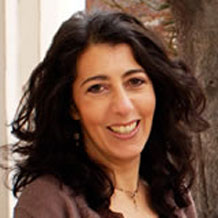
anna_craftProfessor Anna Craft, who died on 11 August at the cruelly early age of 52, was a key figure in the development of the Cambridge Primary Review Trust, a widely respected educational researcher and writer, an outstanding colleague and a true friend.

Within CPRT, Anna concentrated particularly on research, and the Trust’s South West Research Schools Network based at Exeter and Bath Spa universities was very much her creation, as was the forthcoming research-based CPD programme on children’s voice on which the Trust is  working with Pearson. The common strand was her commitment to making a difference to children’s lives. Heeding children’s voices and helping teachers to enhance their own understanding and skill were central to that quest.

Outside CPRT, Anna simultaneously held senior positions at Exeter University and the Open University, and her research on creativity in education, educational futures and ‘possibility thinking’ is highly regarded in both the UK and other countries.  This work is driven by Anna’s concern that today’s complex and fast-changing world requires creative capacities whose development from the early years onwards we neglect at our and our children’s peril.

Anna saw creativity as an everyday and lifelong imperative, a problem-finding, problem-solving capability with possibility thinking – the transformation from what is to what might be – at its heart. Creativity in this larger sense includes but also reaches well beyond the arts to encompass a wide array of cognitive and affective capacities that have yet to achieve the central place in children’s education they deserve. Symptomatically, creativity thus defined could well be another of those ‘parts the national curriculum doesn’t reach’. In any event, Anna would have taken issue with the BBC interviewee who claimed that by including art and design, design technology and music, England’s new national curriculum does all that needs to be done for children’s creative development.  Anna therefore bequeathes a challenge as well as a vision.

The best academic work in education displays not just impeccable scholarship but also a passion for the life-enhancing possibilities of education itself and a desire to persuade others that this is a cause for which we have no option but to fight. That combination of rigour, intensity and integrity of purpose and eagerness to communicate and persuade marked all Anna’s work and reflected the kind of person she was.

But the other Anna, noted by friends, students and colleagues alike, was warm, lively, engaging, affectionate, funny – in short the best of company and a wonderful person. We shall miss her.

  •  Anna Craft’s funeral is at 2pm on Friday 22nd August near Totnes, Devon. Full details here.
  • Do please add your thoughts and memories below.

Filed under: Anna Craft, Cambridge Primary Review Trust, creativity Tagged:Anna Craft, Cambridge Primary Review Trust, creativity

July 16, 2014 by Robin Alexander

What has CPRT been up to?

In September 2013 the Cambridge Primary Review Trust (CPRT) took over from the Cambridge Primary Review (CPR). We had a grand launch event in London chaired by Jonathan Dimbleby, but then CPRT went quiet, publicly at least. As explained in our March post, this was because we were waiting for our new website, delayed for reasons we won’t bore you with. Here it is at last.  Take a look: you’ll find that silence signalled not inactivity but the opposite. For example: 

  • CPR’s evidence on the condition and future of primary education remains unrivalled in its scope, diversity and depth. But evidence cannot stand still and we’ve launched eight new research projects to update and extend the evidence that good quality primary education requires. The new projects include five commissioned research reviews relating to CPRT’s priorities and a joint project with York University on dialogic pedagogy as a tool for tackling disadvantage.  Joining us in this work are some  exceptional talents: epidemiologist Kate Pickett (chronicler of inequality and author of the bestselling The Spirit Level), educational neuroscientist Usha Goswami, assessment and science education expert Wynne Harlen, international pedagogy luminary David Hogan, among others. Find out more
  • CPRT’s regional networks and Schools Alliance have been merged to give each region a core group of schools that are not only judged outstanding by Ofsted but are also committed to the CPR aims and evidence and to finding practical ways to tackle the CPRT priorities. Find out more
  • Regional activity has taken different forms. For example, the South West now has a lively group of CPRT Research Schools. London has a Teachers’ Reading Group.   St Leonard’s School, like an increasing number across the country, builds explicitly on CPR. These are just three examples of regional activity among many.
  • CPRT’s partnership with Pearson, which supports but is entirely independent of our core activities, has produced Primary Curriculum 2014, a well-received series of regional conferences plus an excellent handbook and video, all designed to help schools implement the new National Curriculum within the larger framework of CPR aims and principles. Unusually in the countdown to national curriculum implementation, Primary Curriculum 2014 doesn’t confine itself to the core subjects but treats the whole curriculum with equal seriousness and enthusiasm. This the first stage of a programme of joint CPRT/Pearson support for schools which will also cover issues such as assessment without levels, curriculum audit and children’s voice. Find out more

As for the new website, you’ll see that although it remains the definitive source of information about the Cambridge Primary Review, its evidence and its many  publications, it has the vital feature of interactivity that the old site lacked. Previously there was no shortage of comment, but responding to it required an email. The new site’s blog enables the debate to become more lively and much more inclusive. This first blog is more in the nature of an announcement, but we promise regular postings about a range of issues relating to primary education policy, practice and research, nationally and internationally. We’ll also be inviting guest bloggers.  Watch this space, and then join in. Usual protocols: comment is free but fact is sacred; nothing obscene or defamatory …

Please read our Terms of Use and join in the conversation.

www.robinalexander.org.uk


Filed under: Cambridge Primary Review Trust, networks, Pearson, research, Robin Alexander

« Previous Page

Contact

Cambridge Primary Review Trust - Email: administrator@cprtrust.org.uk

Copyright © 2026